What an AI Orchestration Platform Does
Most teams do not have an AI problem. They have a coordination problem.
A few people use ChatGPT. Someone else runs prompts in Claude. Marketing has one workflow tool, product has another, and engineering is testing agents in a separate stack. Files live everywhere. Context gets lost between meetings, docs, and tickets. Then leadership asks the obvious question: if we are investing in AI, why does work still feel fragmented? That is where an ai orchestration platform starts to matter.
What an ai orchestration platform actually is
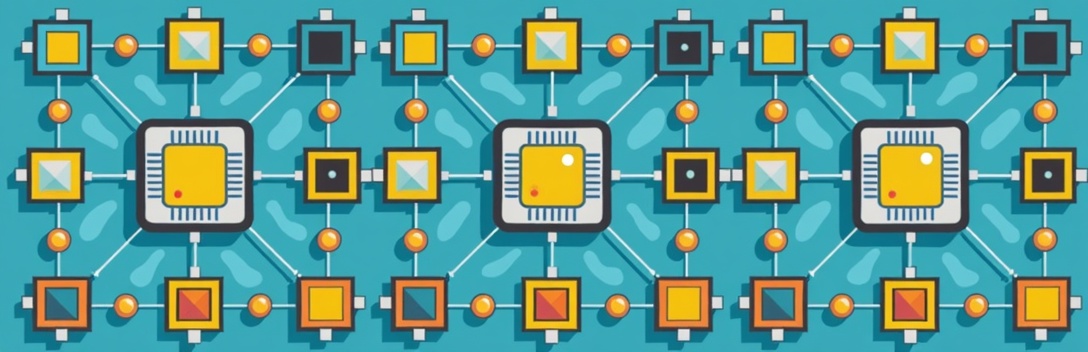
An ai orchestration platform is the operating layer that coordinates how people, models, workflows, data, and tasks work together. It is not just a chatbot with extra buttons. It is the system that routes work to the right AI, preserves context, connects inputs and outputs, and gives teams one place to execute.
That distinction matters. A single AI app can help one person draft a memo or summarize a call. An orchestration platform is built for team output. It supports shared context, multi-step work, model choice, governance, and the handoff between thinking and doing.
If your current setup looks like prompt tabs, copied answers, disconnected notes, and manual follow-up, you are already doing orchestration. You are just doing it badly, by hand, with no control layer.
Why teams are moving past standalone AI tools
Standalone AI tools were fine for the first phase of adoption. They helped companies prove that AI could save time on writing, research, support, and coding. But once usage spreads across a business, the cracks show up fast.
The first crack is context loss. A model can answer a question well, but if it cannot reliably carry forward project history, meeting notes, source files, and prior decisions, every interaction starts from zero. Teams waste time re-explaining work the system should already understand.
The second crack is model lock-in. Different models are better at different jobs. One might be stronger at analysis, another at coding, another at long-context reasoning, another at image generation. Betting all workflows on one model is convenient, but it is rarely optimal.
The third crack is execution drag. Even when AI produces a good output, work often stalls before it reaches the next step. A summary does not become a task. A research brief does not become a project plan. A generated code snippet does not become a tested deployment. The missing piece is not more AI. It is orchestration.
What good AI orchestration looks like in practice
A strong ai orchestration platform gives teams a shared workspace where humans and multiple AIs can work against the same context. That sounds simple, but it changes how work moves.
Instead of pasting files into separate tools, teams can organize knowledge in persistent structures. Instead of asking one model to do everything, they can compare outputs side by side and use the best one for the job. Instead of treating AI as a one-off assistant, they can make it part of the workflow itself.
In practice, that means a product team can pull call transcripts, customer feedback, specs, and competitor research into one environment, then use multiple AIs to summarize themes, draft requirements, pressure-test decisions, and turn conclusions into tracked work. Marketing can move from campaign ideas to asset generation to copy review without losing context between tools. Engineering can go from tickets to code generation to validation inside a more controlled development environment.
The pattern is consistent: less switching, less rework, fewer blind handoffs.
The capabilities that matter most
Not every platform that uses the word orchestration actually earns it. Some products are still wrappers around a single model. Others automate narrow tasks but do not support real team collaboration.
The strongest platforms usually combine five capabilities.
First, they support multi-model execution. Teams need the freedom to route work to the best model for each task and compare results when accuracy matters.
Second, they preserve shared context. That includes documents, project history, chats, call transcripts, folders, and prior outputs. Without this, every workflow becomes repetitive and brittle.
Third, they connect AI to actual work surfaces. If outputs do not feed into projects, tickets, files, code, or communication, the value leaks out before anything gets done.
Fourth, they support governance. At enterprise scale, this is not optional. Teams need role-based access, auditability, deployment control, and clear data boundaries.
Fifth, they make collaboration native. AI should not sit outside the team. It should participate in the same workspace where people already coordinate decisions and execution.
That is the difference between AI as a novelty and AI as infrastructure.
Why model choice is becoming a business issue
A lot of companies still evaluate AI as if they are choosing a single assistant. That frame is already outdated.
Model performance changes quickly. Pricing changes. Context windows change. Safety behavior changes. Some teams need online research, others need private deployment, and others need highly specialized coding support. Locking the business into one model creates risk you do not need.
An ai orchestration platform gives you leverage here. It lets your team adapt without rebuilding the entire operating model every time the model landscape shifts. You can test, compare, and reroute while keeping workflows stable.
This is not just a technical benefit. It is an operational one. Leaders want consistency in how work gets done, even if the underlying models evolve. Orchestration separates workflow design from model dependency.
The trade-off: more power, more need for discipline
Orchestration is not magic. It introduces structure, and structure only works if teams use it well.
If your organization has weak process hygiene, messy knowledge management, or no clear ownership of AI workflows, a platform will not fix that overnight. It will expose it. Shared workspaces need naming conventions, permissions, and some basic operating rules. Multi-model access is valuable, but without standards, teams can create noise instead of speed.
There is also a maturity question. A five-person startup experimenting with one or two use cases may not need a full orchestration layer on day one. But once AI touches multiple teams, regulated data, customer-facing work, or production code, the cost of fragmentation rises fast.
It depends on the stakes. The more critical the workflow, the more orchestration starts to look less like a nice-to-have and more like the minimum control plane.
How to evaluate an AI orchestration platform
Start with the workflow, not the feature grid. Ask where AI work breaks down today.
Is the issue that teams cannot share context? That model outputs are inconsistent? That nothing connects to project execution? That security and deployment options are too weak for broader rollout? The right platform should solve the bottleneck that is slowing real work.
Then look closely at how the platform handles shared memory, file analysis, meetings, research, workflow execution, and collaboration between humans and AI. If your team writes code, evaluate whether the platform supports development work in a way that goes beyond autocomplete and isolated snippets. If you operate in a controlled environment, deployment flexibility and governance should be part of the first conversation, not an afterthought.
The strongest products feel less like AI chat apps and more like team operating systems. One example is AiMixUp, which is built around the idea that your whole team - humans and 50+ AIs - should be able to work inside one workspace with shared context, execution tools, and enterprise control.
Where this is heading next
The next phase of AI adoption is not about getting better answers in a prompt box. It is about building a work environment where AI can participate across the full chain of execution.
That means calls feed project memory. Files feed research and planning. Research feeds decisions. Decisions feed tasks. Tasks feed code, content, and deliverables. And through all of it, teams keep control over which models they use, where data lives, and how outputs move into production.
Companies that get this right will not necessarily have the flashiest demos. They will have faster cycles, cleaner coordination, and better operational visibility. They will spend less time managing AI sprawl and more time shipping.
If your team is serious about AI, stop asking which chatbot to add next. Ask what system will let people, models, and workflows operate as one unit - with speed, rigor, and control built in from the start.
Related Articles
Enjoyed this? Try AiMixup with free credits
Drop your email, create your account, and we'll load bonus AI credits into it so you can try everything.